Hardwired vs. Plug-In EV Chargers: Which Is Right for Your Home?
Both are Level 2 chargers. The difference is how they connect, and it affects speed, durability and what happens when you move.
By the VoltNeighbor team · November 12, 2026 · 5 min read
Most EV owners charge at home with a Level 2 charger, which runs on 240 volts and adds roughly 20 to 40 miles of range per hour, depending on the car. There are two ways to set one up: hardwired directly to a circuit, or plugged into a 240-volt outlet. Here's how to choose.
What's the difference?
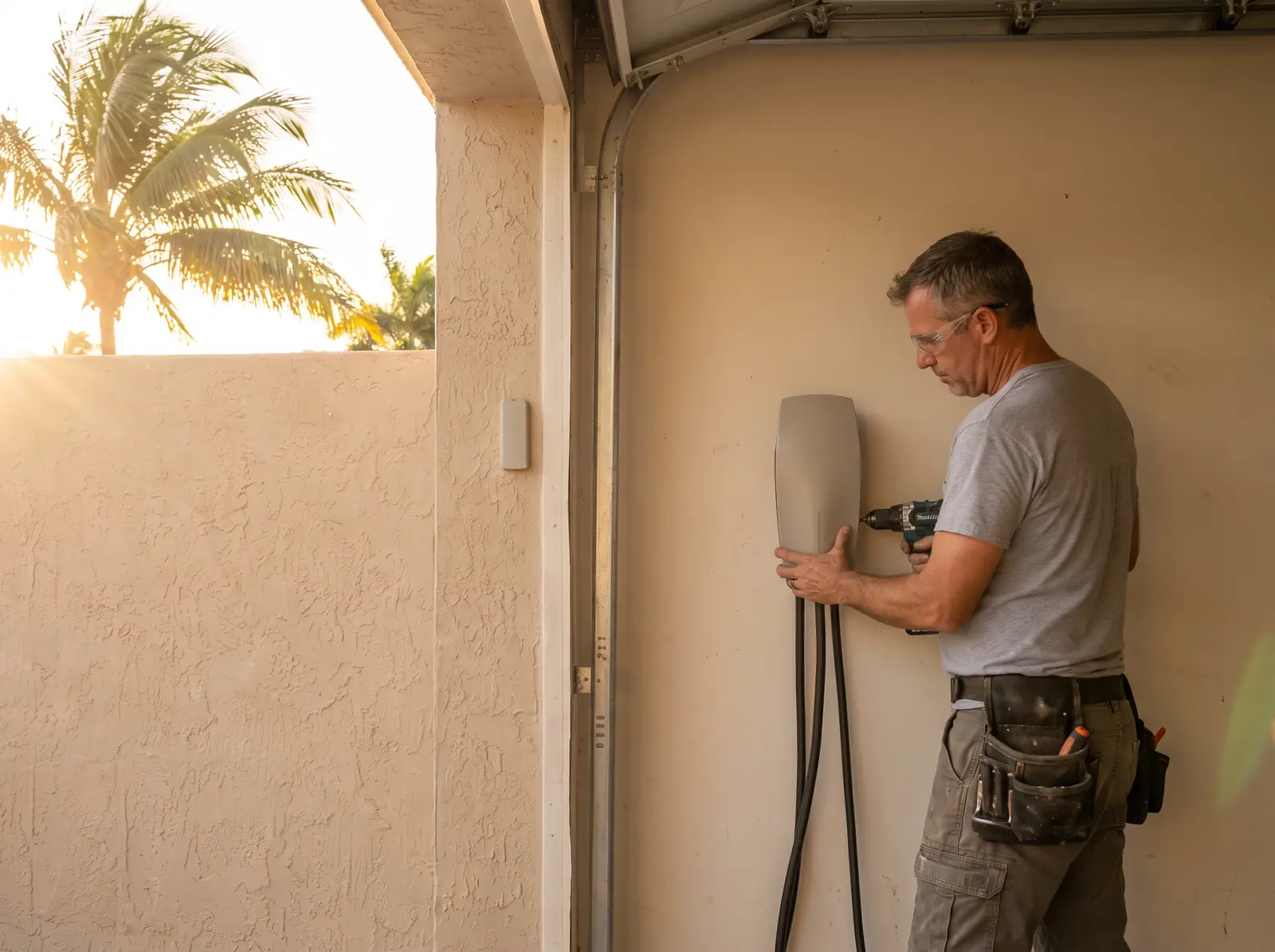
A hardwired charger is connected directly to its own circuit from your panel, with no plug in between. A plug-in charger has a cord with a large 240-volt plug, usually a NEMA 14-50, that goes into a matching outlet installed near where you park.
Charging speed
A plug-in charger on a typical 50-amp outlet circuit charges at up to 40 amps. A hardwired charger can go higher, up to 48 amps on a 60-amp circuit, which matters if your car can accept it. Many EVs can't use more than 40 amps anyway, so check your car's maximum charging rate before paying for extra capacity.
Durability and heat
Charging pulls a lot of power for hours at a time. A hardwired connection has no plug to wear out or loosen. If you go with an outlet, ask your electrician for a heavy-duty, EV-rated receptacle rather than a basic one, and avoid unplugging and replugging it every day.
Outdoor parking
If you park in a driveway or carport, hardwired chargers are usually the cleaner option, since many are rated for outdoor use and there's no exposed outlet. Outdoor outlets need a weatherproof, in-use cover.
Flexibility
A plug-in charger is easy to take with you when you move, and the outlet can also power a portable charging cable. A hardwired unit stays with the wall, though your electrician can disconnect it if you want to bring it along.
What about Tesla?
Tesla's Wall Connector is a hardwired charger. Tesla's Mobile Connector can plug into a NEMA 14-50 outlet with the right adapter. See our guide to Tesla Wall Connector installation.
Quick comparison
- Choose hardwired if you want the fastest charging your car can take, park outdoors, or want the most durable setup.
- Choose plug-in if you rent, expect to move, or want the flexibility of an outlet.
Not sure which fits?
A licensed electrician can check your panel's capacity and the distance to your parking spot, then recommend the right setup for your car. Learn more about home Level 2 chargers, or request a quote and one licensed electrician will call you back.
This article is general information, not professional advice for your specific home. A licensed electrician can assess your situation.
One call, not five.
Tell us about the job. We'll send it to one licensed electrician who serves your area, and they'll call you within 15 minutes during business hours. Free, with no obligation to hire.
Call and we'll connect you with a licensed electrician. Se habla español. Serving all of Miami-Dade County, FL.
Get a free quote from one licensed electrician
One electrician calls you within 15 minutes (Mon–Sat, 8am–6pm), in English or Spanish. After hours, first thing the next business morning. VoltNeighbor is a free referral service, not an electrical contractor.